





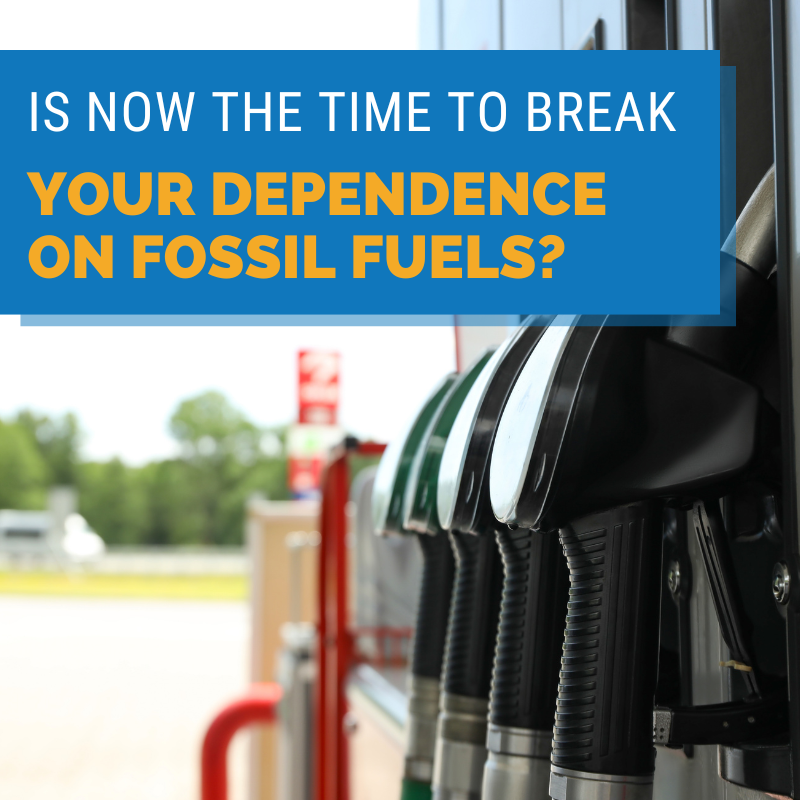
As energy prices increase and recession risk grows, smart businesses and councils are renewing their energy plans to take control and reduce costs.
Energy costs are higher, the fuel crisis in the Middle East is ongoing, and the prospect of a recession in the next twelve months is real. For businesses and councils still mostly dependent on fossil fuels, the current situation demands action to reduce reliance on fossil fuels and to reduce cost. Here we highlight four areas where immediate attention can be paid.
1. Get an energy audit done
An energy audit maps your consumption, identifies inefficiencies, and gives you the data to decide what to fix first. It often uncovers savings that can be captured before any significant capital investment is needed.
An audit also puts you in a stronger position to access government grants and funding programs designed to support businesses and councils investing in clean energy. Grant applications backed by audit data and an action plan are better placed than those without.
2. Take your solar and battery storage plans off the shelf
If your organisation has been sitting on a solar plan or proposal, or holding off on adopting battery storage, now is a good moment to revisit these. Pairing solar generation with battery storage means you can produce energy when the sun is up, store what you don’t use, draw on it to manage your peak demand, or participate in virtual power plant initiatives to improve your return on investment. With solar still a very affordable opportunity and with Government incentives reducing the cost of batteries, now is a good time to refresh your onsite renewable energy plans and act.
3. Plan your gas transition
Gas is often the forgotten fossil fuel dependency. It is a key fuel for many businesses for heating, hot water, cooking and for driving industrial processes. It is usually a secondary cost compared with electricity so can often get overlooked. But gas prices have risen sharply alongside other energy costs, and long-term forecasts may see this continue. Where feasible, electrification is the way forward, and this is being advanced at State level and by numerous local councils. Mapping your gas usage now and building a transition plan covering replacement technologies such as induction cooking, heat pumps, or electric process heating, gives you control over your exposure and replacement timing, and positions you to apply for feasibility and implementation support to switch to electric.
4. Accelerate your EV fleet and charging infrastructure plan
Fleet vehicles are a clear pressure point for businesses and councils right now. Many organisations still treat their EV transition as a future project, but with fuel costs where they are, that’s an expensive position to hold. Plan to transition to commercially available vehicles and plant now, and know what is coming through in the next few years that will help you accelerate your fleet transition. When EV charging is integrated with onsite solar, you’re effectively refuelling from your own roof. The cost per kilometre drops, and your exposure to fuel markets drops with it.
A recession will be difficult for most organisations. Those that have already reduced their energy overhead and cut fossil fuel dependency will be in a stronger position. The window to act is still open.

Our team supports organisations across every stage of the transition – from understanding current energy use through energy audits, to developing a net zero strategy, and providing expert guidance through our climate advisory services.
If you are looking to take the next step in reducing your dependence on fossil fuels and exploring practical pathways across energy efficiency and emissions reduction, please reach out to Barbara or Patrick for more information.
Feel free to use an excerpt of this blog on your own site, newsletter, blog, etc. Just send us a copy or link and include the following text at the end of the excerpt: “This content is reprinted from 100% Renewables Pty Ltd’s blog.


 Your download is ready!