





This post is inspired by a recent presentation I delivered at the National Roads & Traffic Expo, where I introduced leaders in public service, transport, and infrastructure to the essential concept of net zero. One analogy that resonated deeply with the audience was understanding net zero as a balancing act—like a see-saw. Here’s how it works and why it helps to think of net zero as a balance between emissions and removals.
The see-saw of net zero: reducing emissions first
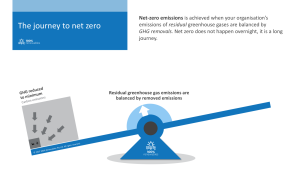
Remember the thrill of sitting on a see-saw as a child? You could feel the weight shift as you and your friend worked to balance each other, with one side dipping low and the other lifting high. Net zero is a lot like that balancing act.
Imagine a see-saw with a large block on the left side representing our current greenhouse gas emissions. This weight, as we know, is pushing our climate beyond safe limits, and the first step toward net zero is to lighten that load.
To do this, we must reduce emissions across every aspect of our operations, from energy use to transportation and materials. This is a long-term process—it won’t happen overnight—but it’s essential to bring emissions down to only the hardest-to-remove sources. These might include emissions from heavy-duty vehicles and construction equipment, high-temperature industrial processes like cement and steel production, and certain public services, such as emergency vehicle fleets, that currently lack low-carbon alternatives.
Balancing emissions with removal-based offsets
Once emissions are reduced to an absolute minimum, we’re left with what we call residual emissions. These are the hardest-to-abate sources, and to achieve net zero, we balance them with removal-based carbon offsets. Unlike traditional offsets, removal-based credits come from projects that actively take carbon out of the atmosphere, like reforestation or soil restoration projects.

Why a balanced approach matters
Achieving net zero isn’t simply about offsetting emissions—it’s about prioritising deep emissions reductions across every part of your organisation first, only relying on removal-based offsets for the hardest-to-abate sources. This balanced approach ensures that net zero remains a meaningful, long-term commitment rather than a distant target.
Offsets should be considered a final step, reserved for emissions that cannot yet be eliminated with current technology. Offsets are a complementary measure, not a substitute for action. Organisations genuinely committed to sustainability will focus on reducing their emissions footprint as much as possible before turning to offsets, demonstrating a proactive approach to climate impact that goes beyond quick fixes.
In summary, the concept of ‘net zero’ simplified
You can simplify net zero into a two-step process:
- Reduce emissions as much as possible
- Balance the rest with removal-based offsets
Together, these steps create a sustainable equilibrium—a future where emissions are aligned with nature’s capacity to absorb them.
Next up: Building your carbon foundations – the first step in your net zero strategy
Want to continue your journey to net zero? Join us for the next post, where we are building a solid carbon foundation—understanding and measuring your emissions.
If you’re ready to take the next steps in your net zero journey and would like expert guidance, our team at 100% Renewables is here to help. Whether you need support in building your carbon foundation, setting ambitious targets, or navigating compliance, we can tailor a net zero strategy to meet your organisation’s specific needs.
Contact us today to learn more about how we can assist you in achieving a resilient, sustainable future.


 Your download is ready!